Last week, Erik C. Nisbet, Owen L. Coon Professor of Policy Analysis & Communication and Director of the Center for Communication & Public Policy, presented his research “Pandemic Legacy: How the COVID Online Ecosystem of 2020–2021 Shaped Enduring Distrust in Public Health” at the Symposium on Science & Politics, hosted by the Center for Science
Profile CCPP
The International Journal of Public Opinion Research has released a special issue titled “Global Perspectives on Science, Polarization, and Populism,” co-edited by CCPP Director Erik C. Nisbet (Northwestern University) and Aysenur Dal (Bilkent University). The special issue brings together scholars from across the world to examine how political polarization and populism shape public opinion about
A new article in Science News spotlights groundbreaking research led by CCPP Graduate Student Affiliate Mowafak Allaham, co-authored by CCPP Faculty Affiliate Dr. Ayşe Lokmanoğlu (Boston University) and CCPP Director Dr. Erik C. Nisbet. The study, titled “Enhancing LLMs for Governance with Human Oversight: Evaluating and Aligning LLMs on Expert Classification of Climate Misinformation,” was
A new article co-authored by CCPP Director Erik C. Nisbet, along with R. Kelly Garrett and Robert Bond of The Ohio State University, has been published in the journal Political Communication. The study, titled “Self-Reported Exposure and Beliefs About Misinformation Across a U.S. Presidential Election Cycle: Expressive Responding and Motivated Reasoning,” investigates how Americans report
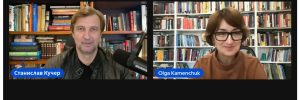
CCPP Director Erik C. Nisbet and CCPP affiliate faculty member Olga Kamenchuk have co-authored a new book chapter, “Unpacking the Psychology of State-Sponsored Disinformation Operations and Implications for Public Diplomacy Counterstrategies,” published in Handbook on Public Diplomacy edited by Sean Aday (Edward Elgar Publishing, 2025). The chapter challenges the dominant focus on technology in discussions
CCPP Graduate Research Affiliate Fatima Gaw, a PhD candidate in Media, Technology, and Society at Northwestern University, has co-authored a new article in Political Communication, one of the leading journals in the field. The article, titled “Towards the Comparative Study of Domestic Influence Operations: Cyber Troops and Elite Competition in Indonesia, the Philippines, and Thailand,”
CCPP Graduate Affiliate Chloe Mortenson and CCPP Director Erik C. Nisbet recently had their co-authored article, “Benefit-Seekers or Principle-Holders? Experimental Evidence on Americans’ Democratic Trade-Offs,” accepted for publication in Perspectives on Politics. Their study investigates how Americans navigate trade-offs between core democratic principles, such as political equality, rule of law, and freedom of expression, and
CCPP Undergraduate Affiliate Paige Galperin recently presented findings from her summer research project, “From Bark to Bite: The Link Between Political Discussion Network Composition and Support for Partisan Violence,” at Northwestern University’s Summer Research Opportunity Program (SROP) Research Symposium on August 7th. Drawing on data from CCPP’s 2024 National Post-Election Survey, Paige examined how the
On May 18th at the 78th annual conference of the World Association of Public Opinion Research (WAPOR) in St. Louis, MO, CCPP Director Erik Nisbet gave an invited keynote speech on the topic of “The Emergence of the ‘Illiberal’ Voter? Comparative Analysis of American and Global Elections 2016–2024.” Drawing upon multiple U.S. election surveys conducted
Memes have become a critical communication tool for partisan and extremist groups. CCPP scholars took a deep dive into the content of memes on alternative (or fringe) platforms, and what they found is just as concerning as it is fascinating. There is no doubt that 2024 will be saturated with online political content, but some